Canton of Fribourg

File a complaint in the canton of Fribourg without travelling

To understand the origins of our platform and its objective (to simplify a process often experienced as burdensome), you can also read the About page.

Start my complaint
5-10 min to complete the form
29 CHF one-time payment
No travel to a police station
No account no password needed

A theft? Property damage? We are listening.

Pickpocketing

Theft (simple theft, pickpocketing or theft by trick)

A bag set down for two minutes, a wallet in an open pocket, a distraction on public transport, trust abused by misleading words: theft without violence takes many faces. What unites them is the absence of direct physical constraint and, often, the late realisation : the moment one notices that something has disappeared.

In the centre of Fribourg, in Bulle, on a station platform or in a shop in Estavayer or Murten, this type of offence leaves a sense of powerlessness. Yet reporting it makes it possible to establish an official record of the event and to pass on usable elements to the authorities (time slot, precise place, description of what was taken). The sooner you note the details, the more faithful your statement will be to the reality experienced.

Learn more
Bicycle theft

Bicycle or scooter theft

Bicycles and scooters are no longer mere leisure items: they are mobility equipment, sometimes costly, sometimes indispensable for getting to work or taking children to school. When a model disappears, even well locked or after an absence of only a few minutes, the material loss is added to the practical constraint: disrupted journeys, delay in re-equipping, a sense of insecurity at usual parking places.

In the canton of Fribourg, between urban axes and inter-municipal links, cycle thefts concern the classic bicycle, the mountain bike, the e-bike and the scooter. Indicating the make, model, colour, frame number if known, as well as any distinctive mark, strengthens the quality of the report. For a more general text on the subject, our page Bicycle / scooter theft usefully complements this section.

Learn more
Vehicle theft

Motor vehicle theft

A motor vehicle (car, motorcycle, scooter) often represents far more than a bodywork: access to work, family autonomy, a professional tool for many self-employed people. Its immediate absence creates a brutal gap in the organisation of daily life. The theft can occur on a public road, in a shared car park, near a home or workplace, including in a closed space if the conditions allow.

Every statement helps feed the data available to the authorities to analyse methods of operation and guide investigations. You do not need to “know everything” about the offender: concentrate on what you observe: usual parking place, last use, particularities of the vehicle, plates, chassis number if you have it to hand. On our page Motor vehicle theft, we present the approach and the useful fields in the form.

Learn more
Property damage

Property damage

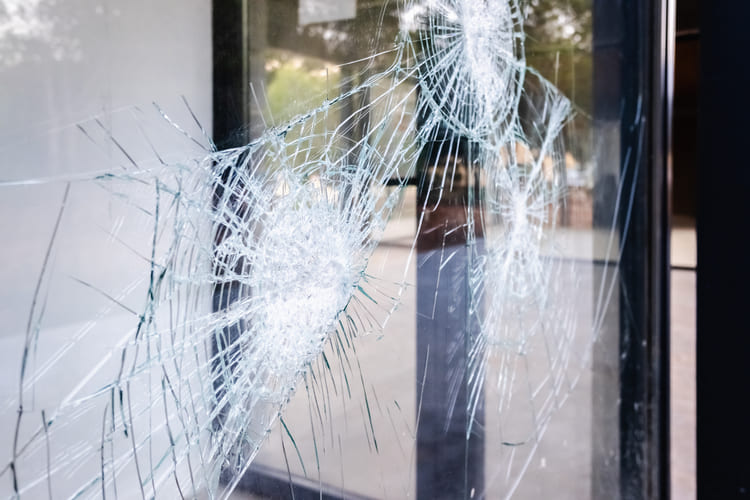
Broken glass, a ripped-out letterbox, graffiti on a façade, a damaged lock, damage to a parked vehicle: attacks on property may be visible and immediate, or discovered with delay. They hit the sense of security, even when no break-in or theft is added to the picture.

In your municipality in the canton of Fribourg, reporting damage makes it possible to document the state of the premises at the moment of discovery and to link the incident to a local context (repeat offending in the same neighbourhood, a series of similar acts). It is not a matter of dramatising: it is a matter of describing factually what was damaged, when you noticed it, and in what circumstances. For an overview of the theme, see our page Property damage.

Learn more

Start my complaint

Why act after a theft or damage in the canton of Fribourg?

Many people hesitate: “It was not serious”, “I will never find my property again”, “it will take hours”. Yet a structured statement helps to set out the facts with precision: date, place, circumstances, description of the items or the damage. That clarity benefits the processing chain, and it saves you from having to reconstruct everything from memory several weeks later if the situation evolves (insurance, administrative follow-up, or the need to provide a copy to a third party).

On Fribourg territory, life in the city, on the outskirts or in the valleys does not change the central idea: your statement counts. It contributes to documenting incidents which, taken in isolation, seem minor, but which can reveal a pattern when they are cross-checked. It is not for you to “prove” the whole matter alone: it is a matter of providing a coherent account and the useful information you already have.

How does it work?

1

Complete

I complete my complaint form online, calmly, at my own pace. I describe what happened and add the relevant information.

2

Print

Once finished, I receive the form by e-mail. I download it and print it so that I can sign it.

3

Send

I sign the document and send it by post to the competent authority, whose address appears on the form.

Before you start: what will save you time

You can open the form without having everything in front of you, but gathering a few elements in advance makes entry smoother:

  • Place of the event (street, municipality, establishment, station, etc.) and period (date and approximate time if needed).
  • Description of the facts in chronological order, even briefly: what you were doing, what you noticed afterwards.
  • For stolen or damaged property: make, model, colour, serial or frame number where applicable, approximate value if you know it.
  • Up-to-date contact details to receive the document by e-mail and for possible follow-up by the authorities.

On average, completing our form takes between 5 and 10 minutes. You proceed at your own pace; what matters is the faithfulness of the information, not typing speed.

Our role in the canton of Fribourg

Preparing a complaint can seem intimidating: one fears forgetting a detail, wording that is “not legal enough”, or simply the emotional load of the account. Our role is to guide you step by step in a structured form, so that the essential information is collected in an orderly way. We do not replace the Fribourg authorities: we help you constitute the written support that you will send them.

Once your entry is finalised, you have a document to print and sign; the address of the competent authority for sending appears on the form. For any question about how we work or the journey, write to us via the Contact page. For the contractual framework and the obligations of each party, see our terms of use.

Important reminder: we are not a police or judicial authority. Processing complaints is a matter for the cantonal authorities. We recall this distinction on all our pages to avoid any confusion.

File a complaint now.

Have you been the victim of a theft or of damage? Do not leave the matter unresolved.

In a few minutes you can describe what happened and start a simple process without travelling. Your statement matters : for you, for others, and so that the facts are taken into account.

Start now : we guide you step by step.

Start my complaint

Frequently asked questions

How long does it take?
On average, completing the form takes between 5 and 10 minutes. This time may vary according to the complexity of the facts and the level of detail you wish to give, but we have designed the journey so that it remains simple to follow, without rushing you.
Do I need to create an account?
No. No account is required. Everything happens through the online form and by e-mail: you receive the document to finalise at home, without creating a profile or remembering a password with us.
Do I have to go to a police station?
No, not as part of our service. You prepare your complaint online, then print, sign and send the document by post from home. You thus avoid travelling to the station for this preparation step.
Is my complaint actually taken into account?
Yes. Once your complaint is sent according to the arrangements indicated, it is processed like any complaint filed in person at a police station. Depending on the case, you may receive a telephone call from the police: that is a matter for the authorities, not our platform, but it shows that your statement does enter the usual circuit.
Can I track the progress of my complaint?
Follow-up depends on the procedures of the canton or the authority to which you send your complaint. We do not follow files personally on ma-plainte.ch once the mail has gone; you may, however, be contacted by the police if needed, according to the practices of your canton.
Can I send my complaint by e-mail, or only by post?
A handwritten signature is required, which in principle means sending by post. The precise arrangements (address, any attachments) are recalled on the document we send you: read them carefully before posting.
Are my data secure?
Yes. The data you enter are processed confidentially and securely, in accordance with Swiss data-protection law. Confidentiality is part of the framework in which we design the service.
Can I file a complaint anonymously?
No for an official complaint: that requires your full identity. Reporting an incident without filing a complaint, however, falls under other steps, sometimes directly with the police, depending on what you wish to obtain.
Can I correct a mistake after completing the form?
As long as you have not yet sent the signed document to the authority, you can start again and submit a new form. Only the signed form sent by post is authoritative: so correct it before final posting if you spot an error.
How much does it cost?
The service costs 29 CHF, payable once. This amount covers the preparation of your complaint via our guided form and access to our support if you have questions about the process.
Can I get a refund if I change my mind?
No. Payment is final once the form has been generated, because processing starts immediately after validation. It is therefore not possible to obtain a refund after this step: inform yourself well before confirming payment.